
What is a palengke? The Filipino wet market, and how to shop it without going
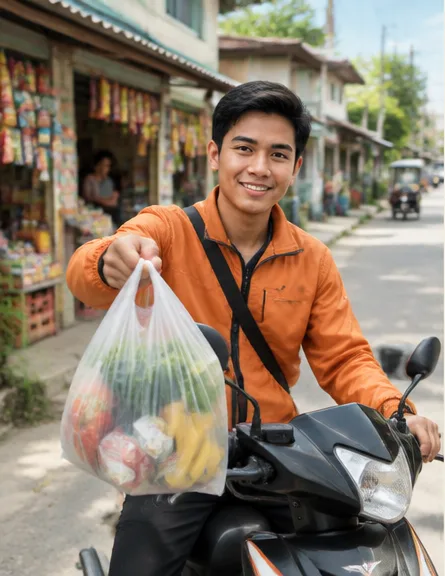
Cheaper than the supermarket, but crowded, hot and best at dawn — that is the palengke. Here is what it is, why prices are lower, and how to shop it without going.
Bisaya: Palengke (merkado): ang Hopper ang mamalit sa imong presko gikan sa tindahan.
Tagalog: Palengke: ang Hopper ang bibili ng sariwa mula sa tindahan para sa iyo.
What a palengke is (English, Bisaya, Ilonggo)
A palengke is the Filipino public market — the wet market where fresh meat (karne), fish (isda), vegetables (gulay), fruit and dry goods are sold at stalls, usually cheaper than the supermarket. In Bisaya (Cebuano) and Ilonggo (Hiligaynon) it is often called the merkado. In English it is a wet market or public market. It is where many families do their suki shopping, but the crowd, the heat and the early hours are not for everyone.
Shop the palengke without going
With a HazzaHub pabili, a local Hopper goes to the palengke and buys your list — the fresh fish, the gulay, the kilo of pork — and brings it to your gate. You get palengke prices without the trip, the parking or the queue.
How it works
1. Open HazzaHub and choose Buy for me. 2. List what to buy, with how much (a kilo, half a kilo) and any preference. 3. Set the shopping money and your price. 4. A Hopper buys it fresh and brings it home.
What it costs
You set the price. The app suggests ₱20 for an errand inside your own barangay and ₱30 to another barangay, each covering the first 3 km of road, then ₱22 per km by day (₱27 per km from 6 pm to 6 am). Customers pay no booking fee. The goods are paid at cost from the shopping money.
Good to know
For fish or meat, say how you want it cut or cleaned. Tell the Hopper what to do if a stall is out — skip it, or pick a close substitute.
More: Buy for me (pabili)
Become a Hopper: earn doing errands in your barangay
More on the blog
Pabili meaning: in English, Bisaya, Cebuano, Tagalog and Ilonggo
How to pay your electric or water bill without lining up
Someone to line up for you: how pila service works
Padala service: send a parcel or pick up a package the same day (hatod, padala)
How to become a Hopper and earn from errands near you
Is it safe? How HazzaHub checks every Hopper
GCash, Maya and QR Ph explained — and how to pay for an errand
Errands for OFW families: help your parents at home from abroad
Padala meaning: in English, Bisaya, Cebuano, Tagalog and Ilonggo
Hatod meaning: in English, Bisaya, Cebuano, Tagalog and Ilonggo
Pakuha meaning: in English, Bisaya, Cebuano, Tagalog and Ilonggo
Palit and pabakal meaning: buy, in Bisaya, Cebuano, Ilonggo and Tagalog
Sugo meaning: in English, Bisaya, Cebuano, Tagalog and Ilonggo
Sundo and pasundo meaning: fetch a person, in English, Tagalog, Bisaya and Ilonggo
Pakisuyo meaning: in English, Tagalog, Bisaya, Cebuano and Ilonggo
Abono meaning: advance the cash, in English, Tagalog, Bisaya and Ilonggo
Pera padala vs padala: sending money or sending a thing — what HazzaHub does
What is an errand app? Errand apps in the Philippines, explained
Pasalubong meaning: in English, Tagalog, Bisaya, Cebuano and Ilonggo
Noche Buena checklist: a pabili list for the Christmas Eve table
Send a padala before Christmas: beat the courier rush with same-day delivery
What is a sari-sari store? The neighbourhood store, and sending someone to buy
How to get an NBI clearance in the Philippines (and skip the line)
How to get a Philippine passport (DFA): appointment, requirements and the line
LTO errands: driver’s licence and vehicle registration without the long wait
How to get a PSA birth certificate (without lining up)